If you want more reliable blood pressure readings, home monitoring can be a smart habit. The key is not just checking your numbers once in a while, but measuring them the right way and keeping a consistent record over time. The American Heart Association notes that a single reading is only a snapshot, while tracking readings over time helps you and your healthcare professional see the bigger picture.
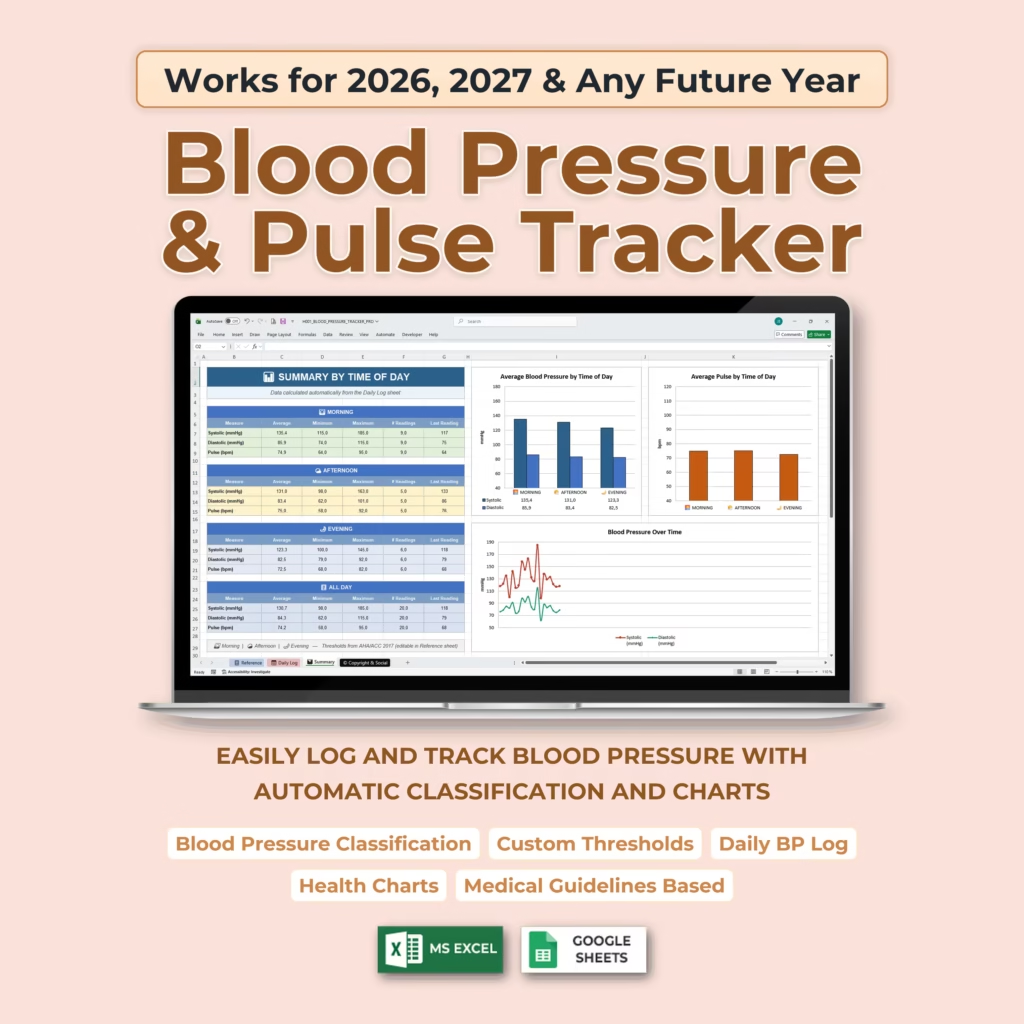
If you want an easier way to organize your readings, use a blood pressure log template for Excel and Google Sheets that helps you track morning and evening measurements in one place.
Why home blood pressure monitoring matters
Checking your blood pressure at home can help you build a more complete picture of your usual readings outside the doctor’s office. That matters because accurate readings can support better conversations with your healthcare professional and help confirm whether your blood pressure is staying in a healthy range. The CDC also warns that inaccurate readings can mislead you in either direction, either making you feel falsely reassured or making your blood pressure seem higher than it really is.
What you need before you start
Before taking a reading, make sure you are set up for accuracy. The CDC recommends avoiding food and drink for 30 minutes before a reading, emptying your bladder, sitting quietly for at least 5 minutes, keeping both feet flat on the floor, resting your arm at chest height, placing the cuff on bare skin, and not talking during the measurement. NHLBI and the American Heart Association also emphasize taking more than one measurement and recording the results.
How to measure blood pressure at home correctly
Start by sitting in a comfortable chair with your back supported. Keep your legs uncrossed and your feet flat on the floor. Rest your arm on a table so the cuff is at heart level, and place the cuff directly on your bare upper arm. Once you are in position, stay still and do not talk while the monitor is running. These details may seem small, but they can affect the reading.
After the first reading, do not stop there. The American Heart Association recommends taking two readings and waiting one minute between them. Recording both readings gives you a more useful picture than relying on one number alone.
Best time to take blood pressure at home
A good rule is to measure your blood pressure at the same time each day. The American Heart Association says consistency matters, and its printable blood pressure log recommends taking readings twice a day: in the morning before medication and eating, and again in the evening. For appointment prep, the same AHA log suggests checking for 3 days minimum to 7 days preferred before your visit.
That makes “morning and evening” one of the most practical routines for people who want a steady tracking habit. It also explains why many people search for phrases like “best time to take blood pressure at home” and “how to keep a blood pressure log.” Those topics naturally belong together.
What to write in a blood pressure log
A useful blood pressure log should include more than just the top and bottom numbers. At minimum, record the date, time, and each reading. If possible, add simple notes that may help explain changes, such as stress, exercise, caffeine, symptoms, or whether you had just taken medication. Several medical resources recommend recording and sharing those results with your healthcare professional, because patterns over time are often more useful than isolated readings.
This is exactly why many people prefer a structured tracker instead of random notes on paper. A clean log makes it easier to review trends, compare morning and evening numbers, and spot changes faster.
Common mistakes that can affect your reading
Some of the most common mistakes are simple: talking during the reading, sitting without back support, crossing your legs, placing the cuff over clothing, or letting your arm hang instead of supporting it at chest height. The CDC specifically highlights these posture and setup issues because they can push readings higher or make them less accurate.
Another common mistake is checking once and moving on. Taking two readings one minute apart and tracking them consistently gives you a much more useful record.
When a reading may need urgent attention
If a reading is very high, do not ignore it. The American Heart Association’s home blood pressure instructions state that blood pressure higher than 180/120 mm Hg may be a hypertensive emergency. The same guidance says that if the reading remains high and you also have warning signs such as chest pain, shortness of breath, back pain, numbness, weakness, vision changes, or trouble speaking, you should call 911.
A simple way to stay consistent
The hardest part of home monitoring is usually not taking the reading. It is staying consistent long enough to make the data useful. A simple routine helps: measure at the same times, take two readings, log the results, and keep the format easy to review. The easier your tracking system is, the more likely you are to keep using it. That is especially true if you want to compare morning and evening readings or bring a clean summary to a medical appointment.
Final thoughts
If your goal is to monitor blood pressure at home correctly, focus on two things: good technique and consistent tracking. Sit properly, take two readings, measure at the same time each day, and keep a log that is easy to review. Over time, that record becomes far more useful than scattered one-off numbers. The CDC, AHA, and NHLBI all point in the same direction: accurate home measurement works best when it is done carefully and tracked over time.