The best time to take blood pressure at home is the schedule agreed with your healthcare professional, rather than one clock time that is right for everyone. Morning and evening measurements are used in some home-monitoring protocols, but the purpose of the checks, your treatment and your daily routine matter. Use the same measurement technique and keep a clear record to share with your care team.
Health information notice: This article provides general information about recording home readings. It is not medical advice, a diagnosis or a personalised monitoring plan. Follow your healthcare professional’s instructions and do not stop, delay or change prescribed medication because of this article or a spreadsheet result.
Are morning and evening the best times?
Morning and evening are a recognised option, not a universal requirement. In its UK guideline for adults, NICE NG136, recommendation 1.2.7, specifies two consecutive seated measurements at least one minute apart, twice daily, ideally in the morning and evening, when home monitoring is being used to confirm a diagnosis of hypertension. That diagnostic protocol should not be treated as a lifelong schedule for every reader.
Ask your healthcare professional which times to use, how many readings to take and how long to record them. Once a schedule has been agreed, choose repeatable times that fit those instructions. Keep the actual time of each reading, rather than relying only on a label such as morning or evening.
Should you measure before medication or breakfast?
Ask your healthcare professional how measurements should fit around meals and your prescribed medication. Do not postpone a dose to follow a generic online routine. The National Heart, Lung, and Blood Institute (NHLBI) guidance on living with high blood pressure emphasises continuing your treatment plan and attending follow-up care. Your care team should interpret the readings and decide whether treatment needs to change.
How often should you check your blood pressure?
The frequency depends on why you are monitoring. For the diagnostic protocol described above, NICE recommends recording for at least four days, ideally seven, and excluding the first day’s measurements when calculating the diagnostic average. Keep the original record and let your healthcare professional advise how it should be interpreted. Do not automatically apply that protocol to ongoing treatment monitoring, pregnancy or a child’s readings.
Use a consistent measurement technique
The NHLBI guidance on preparing for a blood pressure measurement recommends avoiding exercise, coffee and smoking for 30 minutes beforehand, emptying your bladder, and sitting quietly in a chair for at least five minutes before the measurement.
It also advises keeping your feet flat on the floor, not talking during the rest period or measurement, uncovering your arm for the cuff, and supporting your arm on a table at heart level. Use an appropriate cuff and a validated home monitor, and ask your care team to check your technique. Follow the device instructions as well as the monitoring plan you have been given.
What should your home blood pressure log include?
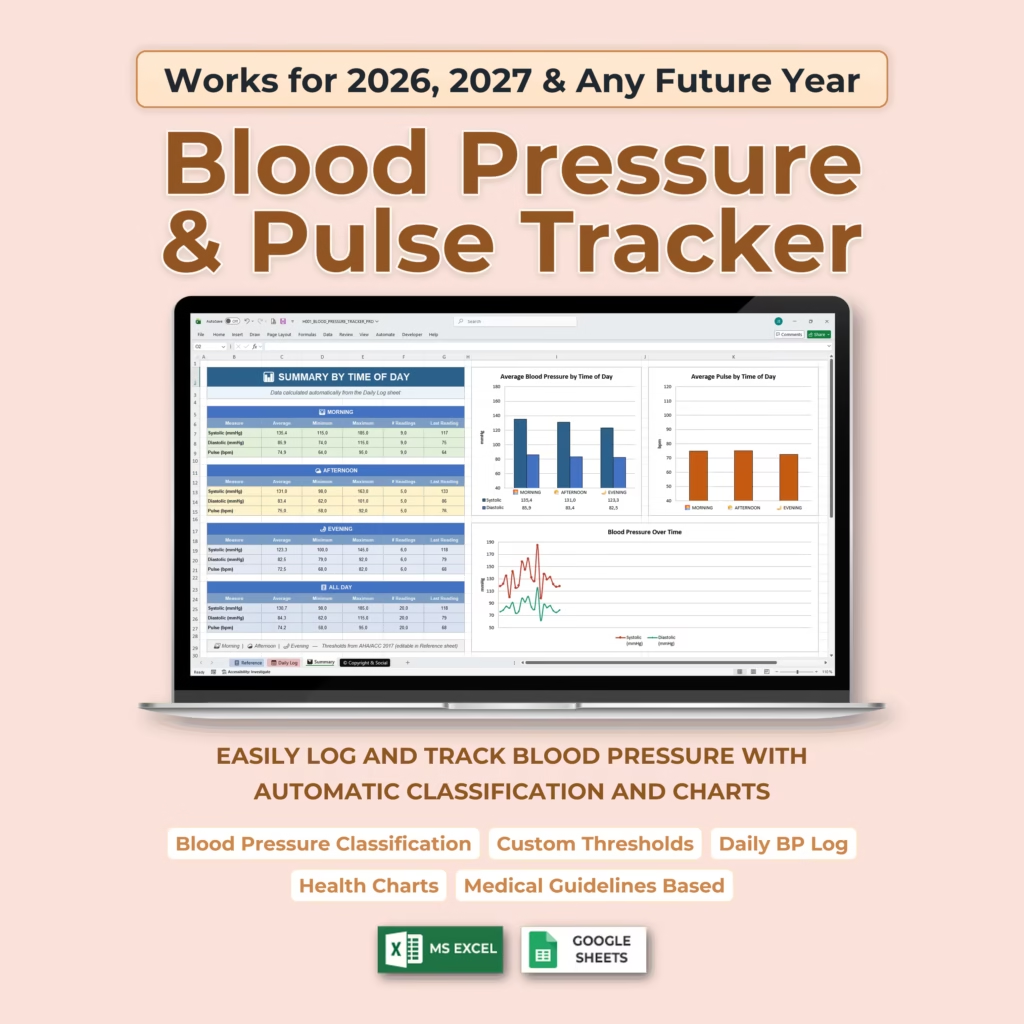
A practical record can include the date, actual measurement time, systolic and diastolic readings, and each repeat reading. Add brief notes when useful, such as a measurement taken at a different time from the agreed schedule. Do not silently remove a result because it looks unusual; discuss readings that concern you with your healthcare professional.
If you prefer a spreadsheet, a blood pressure tracker template can help organise your records. A spreadsheet does not measure blood pressure, diagnose a condition or decide whether a medicine is safe to change. It is a recordkeeping aid, not a replacement for clinical care.
When should you seek medical help?
Ask your healthcare professional what readings should prompt contact and what to do if a result is unexpectedly high. NHLBI identifies a systolic reading above 180 mm Hg or a diastolic reading above 120 mm Hg as a hypertensive crisis; its guidance on seeking help warns that dangerously high readings require immediate medical attention. Seek immediate medical help for readings in this range even if you feel well; do not wait for a routine appointment. If you have symptoms such as severe chest pain, difficulty breathing, sudden weakness or trouble speaking, call your local emergency number immediately. Do not wait for the next scheduled measurement or a spreadsheet update.
Sources and further reading
NICE: Hypertension in adults, NG136, recommendation 1.2.7 explains the morning/evening diagnostic protocol. The guideline was last updated on 26 February 2026.
NHLBI/NIH: High Blood Pressure – Diagnosis explains measurement preparation and technique. The page was last updated on 26 June 2025.
NHLBI/NIH: Living With High Blood Pressure covers continuing treatment, follow-up and seeking help. The page was last updated on 30 April 2024.
Source links and editorial wording checked on 1 October 2026. This is an editorial source check, not a clinical review. These organisations are independent sources and do not endorse Templates Prime or its products.